A city of changing levels
Edinburgh’s Old Town sits within a dramatic landscape of slopes, dense building plots and routes that meet at different heights. A place described as underground may therefore have become enclosed through construction around it rather than through deep excavation. Before imagining a hidden tunnel system, look at the street above, the ground beside it and the structure that created the enclosed space.
This is especially useful when comparing the South Bridge vaults with Mary King’s Close. They are not alternative names for the same attraction. One relates to chambers associated with a major bridge and surrounding development; the other preserves parts of a close beneath later building. Their physical histories differ, even though both can be marketed through darkness, atmosphere and stories of former residents.
Bridge chambers and commercial life
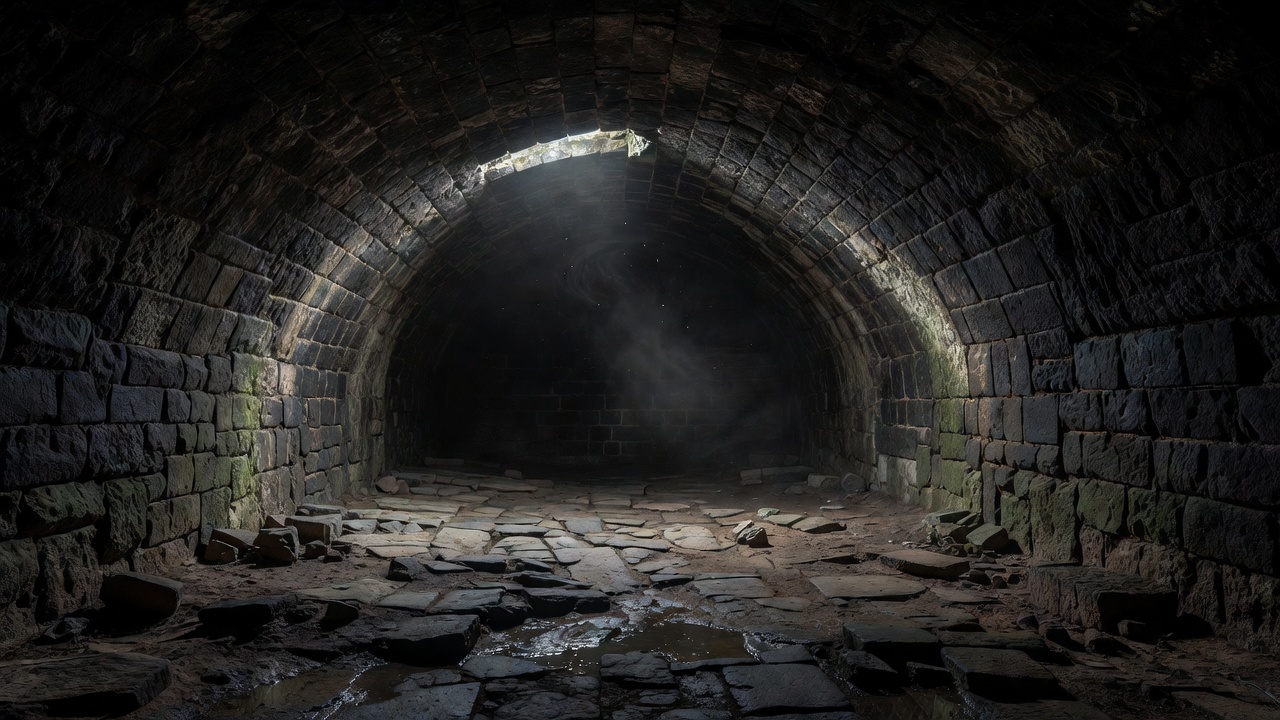
South Bridge opened in 1788, helping movement across the difficult topography south of the Royal Mile. Development around the bridge created enclosed spaces associated with its arches. The vaults were connected with commercial activity, including storage and workshops. Their usefulness depended on ordinary conditions: access, light, ventilation and the ability to keep goods reasonably dry.
Dampness and changing uses are central to understanding these chambers. A room that appears atmospheric on a short tour could have been inconvenient or unhealthy as a working environment. When hearing accounts of later occupation, ask which details are documented for the particular vault being visited. General statements about poverty in the Old Town should not automatically become precise biographies of everyone who used a room.
Bridges and dense development create enclosed chambers.
Trade and storage shape everyday activity.
Managed tours bring selected spaces back into view.
A close is not a quarry tunnel
Mary King’s Close takes its name from a historic resident and belongs to the pattern of narrow lanes running from the Royal Mile. Portions were enclosed beneath the eighteenth-century Royal Exchange, now associated with the City Chambers. The visitor experience therefore concerns a changing urban streetscape and its buildings, not a purpose-built subterranean settlement equivalent to those in Cappadocia.
The distinction changes the questions worth asking. Where did daylight once reach? How did households share services? What happened when later construction altered access? A doorway can be evidence of an ordinary street relationship before it becomes a feature on an underground tour. Understanding that earlier arrangement helps recover the close as a lived environment rather than merely a dark setting.
Stories, legends and the evidence between
Edinburgh has a vigorous tradition of storytelling, and many tours deliberately mix historical interpretation with supernatural entertainment. That can be enjoyable when the format is clear. It becomes misleading when a legend is presented as established evidence or when an evocative claim replaces what is actually known about the building. Ask whether a story comes from records, later tradition or the guide’s performance.
Accounts of plague and enclosed closes need particular care. The familiar image of an entire community deliberately sealed away is not a reliable summary of the history. Epidemic disease, hardship and urban change are serious subjects, and their complexity should not be reduced to a single frightening scene. A good interpretation can remain vivid while acknowledging uncertainty and correcting popular myths.
Book the atmosphere you actually want
Different operators use different chambers, including spaces associated with Blair Street and other parts of the South Bridge area. Booking one vault tour does not mean you will see all the vaults. Compare the exact route, group format and content rather than choosing solely by the word “underground.” A history-focused daytime visit and an evening ghost tour can feel very different in the same general location.
If sudden noises, low lighting or theatrical scares would be unwelcome, ask directly before booking. Families should follow the particular operator’s age and suitability rules rather than assuming that every heritage tour is designed for children. Anyone with sensory sensitivities may benefit from a clear description of sound effects, lighting changes and whether there is a quiet place to pause.
Practical care beneath the city
Expect that some historic routes may include steps, uneven stone, damp areas and periods of standing. Check the current access statement for the specific tour. “Only a short walk” does not tell you whether there are handrails or whether a wheelchair can use the route. Ask about exit arrangements if you are unsure about confined spaces, and do not assume you can leave a guided group independently.
Stay with the authorised route and avoid touching walls or moving objects. Private basements and closed passages are not extensions of a public attraction. Above all, let the architecture complicate the story. Edinburgh’s enclosed spaces reveal changing commerce, construction and everyday life; they do not need every shadow to contain a legend in order to be worth your attention.