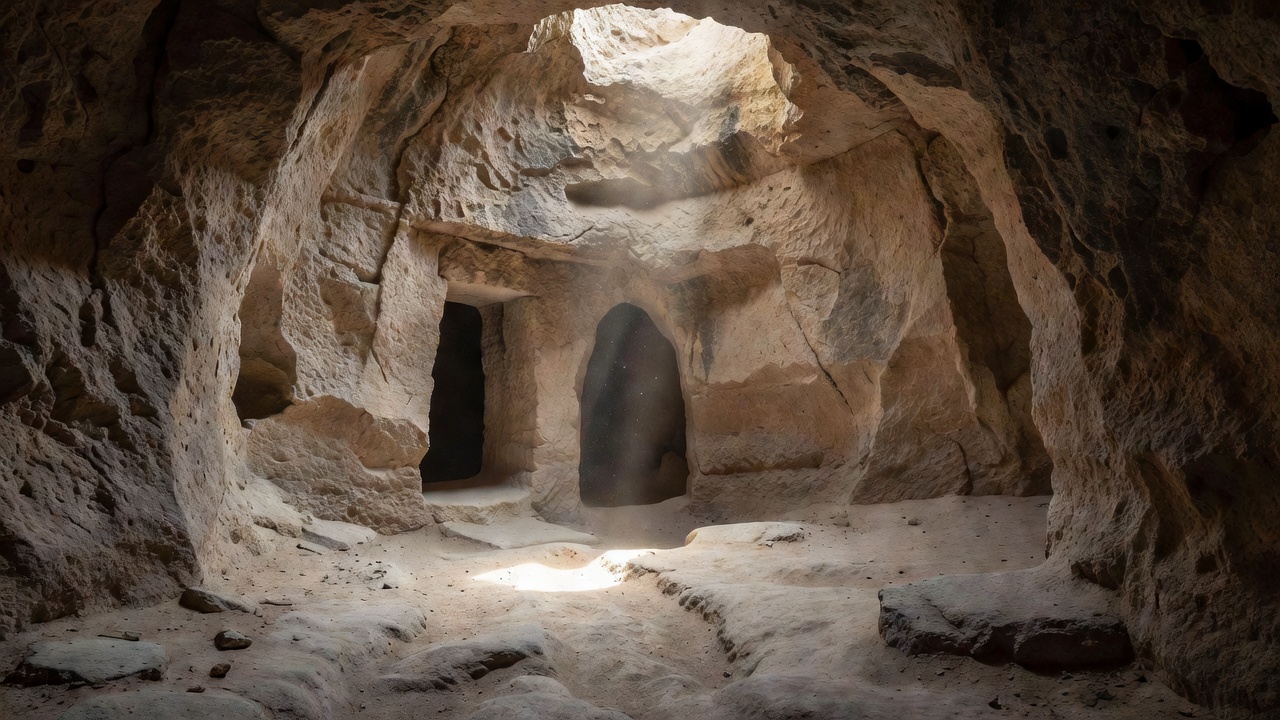
A landscape people could reshape
Cappadocia’s underground complexes belong to a wider landscape of rock-cut architecture in central Türkiye. Volcanic deposits created materials that could be excavated and adapted, although their properties vary from place to place. Above ground, Göreme’s carved religious spaces show one expression of this tradition. Beneath settlements such as Derinkuyu and Kaymaklı, excavation created another: connected rooms whose usefulness depended on air, circulation, storage and the ability to control movement.
The phrase “underground city” is memorable, but it can suggest a complete urban world occupied continuously in the same way. A more useful starting point is a changing complex. Different spaces could support food preparation, livestock, storage, worship or refuge, and these functions did not necessarily belong to one construction campaign. Surviving architecture is evidence of repeated decisions, not a floor plan with every original label still attached.
What a room can—and cannot—tell you
At Derinkuyu, the relationship between vertical shafts and horizontal passages makes the engineering especially striking. A visitor may notice a doorway before noticing the air moving through it. Ventilation and access were essential to making enclosed rooms usable, but a shaft should not automatically be interpreted as having just one purpose. Ask a guide which functions are supported by physical evidence and which remain interpretations.
Kaymaklı offers another arrangement of connected spaces, often experienced through low openings and changes in level. Rather than ranking sites by advertised depth, compare how rooms connect. A broad chamber reached through a constricted passage creates a different experience from a long corridor with regular side openings. These distinctions matter historically, and they also matter to anyone deciding whether the visit will feel manageable.
Rooms and routes are cut into workable rock.
Storage and communal functions change over time.
Controlled passages help protect access.
Refuge without an easy origin story
Heavy circular stone doors are among the most recognisable features in these complexes. They demonstrate that access could be restricted, but they do not explain every period of use. Defensive arrangements make sense in a region that experienced political change and episodes of insecurity. They should not become a shortcut to assigning every room to one conflict, one community or one dramatic emergency.
Accounts of Cappadocia frequently combine early origins, Byzantine-period use and later rediscovery into a tidy narrative. The dating of individual features is more complicated. Excavation can remove or disturb earlier evidence, while reuse can leave layers that are difficult to separate. Treat exact population estimates and sweeping claims about the first builders with care, especially when the supporting evidence is not explained.
Choose the descent, not the superlative
Derinkuyu and Kaymaklı are established public visitor sites, while other complexes, including Özkonak, have their own arrangements and route characteristics. An open site does not mean every underground level is accessible. Closures, conservation work and management decisions can change the visit. Confirm the actual public route shortly before travelling rather than assuming that a diagram represents the areas a ticket permits you to enter.
If you have limited mobility, balance difficulties, respiratory concerns or discomfort in enclosed spaces, contact the operator before committing. Ask whether the route requires sustained stooping, whether stairs have handrails and whether you can turn back without moving against a tightly managed flow. Photographs often make chambers look more spacious because they omit the passages between them. A companion cannot substitute for a route that meets your access needs.
Keep the evidence in place
Wear footwear with reliable grip and carry only what the operator allows. Large bags can catch on narrow openings and make turning awkward. Do not touch carved surfaces for balance unless a designated support is provided, and never test a stone door or enter an unmarked opening. Darkness can conceal changes in floor level as well as archaeological material.
The most rewarding question underground is not simply “How far down are we?” Ask how people stored food, managed shared space and controlled access. Then look again at the humble features: a threshold worn by movement, a small recess, a route that changes direction. They bring the complex closer to human scale without pretending that every uncertainty has been solved.